FIELD NOTES · 5 MIN READ
Why Are Wayuu Bags Expensive? Understanding the Work Behind the Price
The price is not just about yarn—it reflects density, design, finishing, sourcing, and human time.
You are looking at accumulated handwork
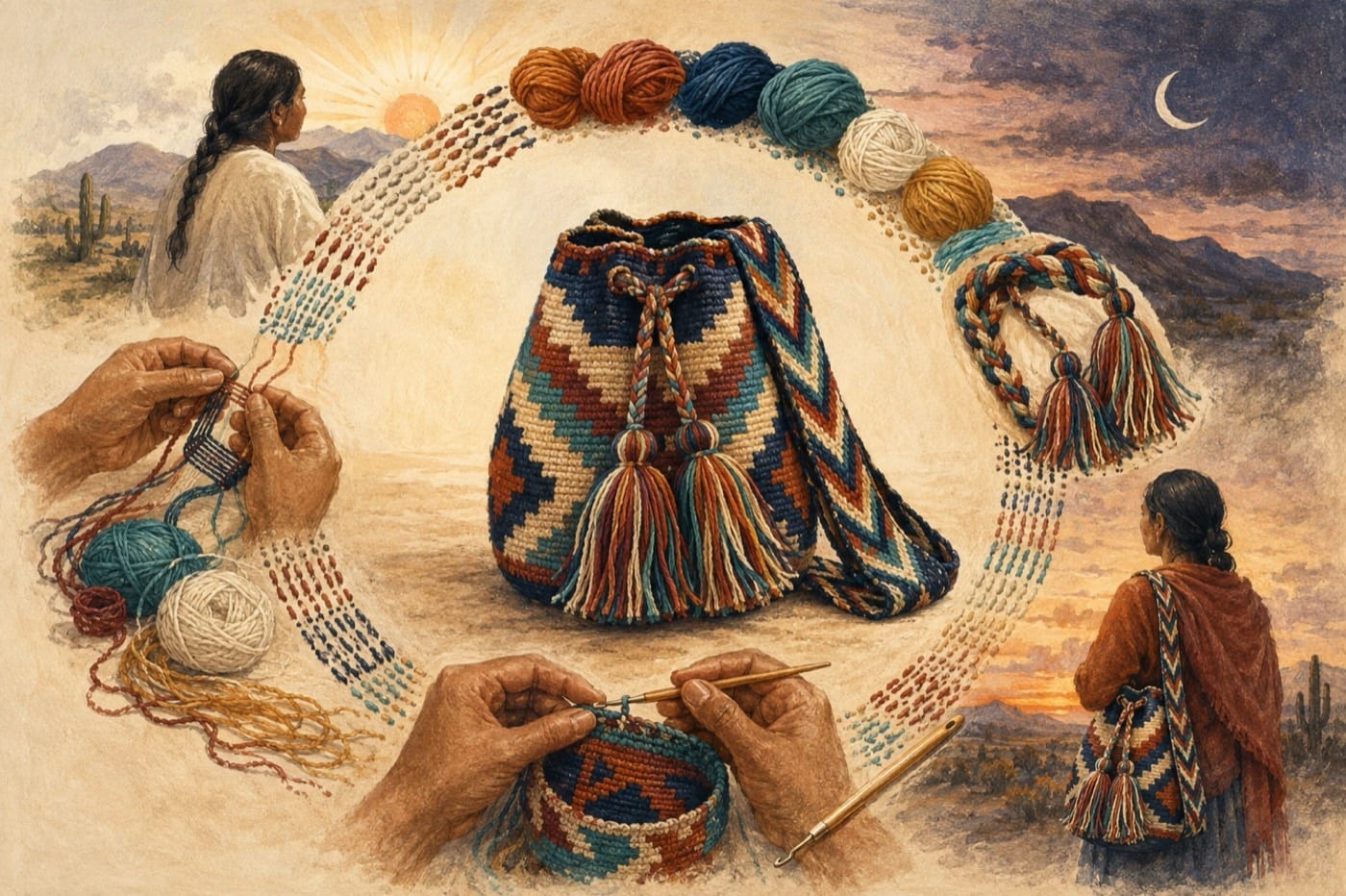
A mochila body grows one crochet stitch at a time. Its base must expand evenly, its pattern must wrap around a curved form, and its tension must remain controlled. The strap, cords, joins, and tassels add separate stages of work.
Smaller single-thread stitches require more repeated movements to cover the same area than larger two-thread stitches. Pattern complexity and finishing can also change the amount of attention a piece requires.
Material cost is not the whole price
Shoppers sometimes estimate value by the apparent cost of yarn. That misses the skilled work that transforms yarn into a stable, wearable object. It also leaves out selection, transport from La Guajira, photography, payment processing, customer support, international delivery, returns, and the risk held by a seller.
Those costs do not automatically make every price fair. They explain why comparing a handworked mochila with a factory-printed bag based on raw material alone produces the wrong comparison.
Why prices vary so widely
Technique, dimensions, density, pattern, strap construction, finishing, provenance, and the number of intermediaries can all affect price. Two bags with similar colors may represent very different amounts of work.
Very low prices deserve questions, but a high price is not proof of good sourcing. The useful test is whether the seller provides enough specific information for the customer to understand what is being purchased.
What value should include
A strong product page should show detailed photography, name the technique and materials, state origin, describe the seller’s role, and set clear expectations for shipping and returns. Those facts are more useful than generic claims that every purchase changes a life.
The enduring value of a well-made mochila is also practical: it is a lightweight bag meant to be carried, used, cared for, and noticed—not a fragile object that has to remain on a shelf.
SHOP THE GUIDE
Compare the pieces
Learn more
References and related reading for this article: