FIELD NOTES · 6 MIN READ
Who Are the Wayuu? Culture, Language, and Living Tradition
An introduction to the Indigenous people of La Guajira—beyond the familiar image of the mochila.
A people across two countries
The Wayuu are an Indigenous people of the La Guajira Peninsula, a territory that crosses northern Colombia and northwestern Venezuela. National borders divide the map, but Wayuu family and cultural ties long predate them.
The name Wayuu refers to people, not a style or pattern. Their culture includes language, kinship, customary law, oral knowledge, foodways, pastoral life, ceramics, music, ritual, and many forms of textile work.
Wayuunaiki and family life
Wayuunaiki is the Wayuu language. It belongs to the Arawakan language family and remains central to identity and education. UNESCO has documented community-led education built around Wayuu identity, territory, language, and knowledge.
Wayuu society is matrilineal: family belonging is traced through the mother’s line. Maternal relatives and clan relationships play important roles in social life. This is one reason it is too simple to describe weaving as an isolated craft; skills, stories, and responsibilities live within networks of family and community.
The palabrero tradition
The pütchipü’üi—often translated into Spanish as palabrero, or word messenger—helps mediate disputes between Wayuu matrilineal clans. The system uses dialogue, compensation, ceremony, and collective responsibility to restore social harmony.
UNESCO inscribed this normative system on its Representative List of the Intangible Cultural Heritage of Humanity in 2010. It is an important reminder that Wayuu heritage cannot be reduced to the products most visible in international markets.
Weaving as knowledge
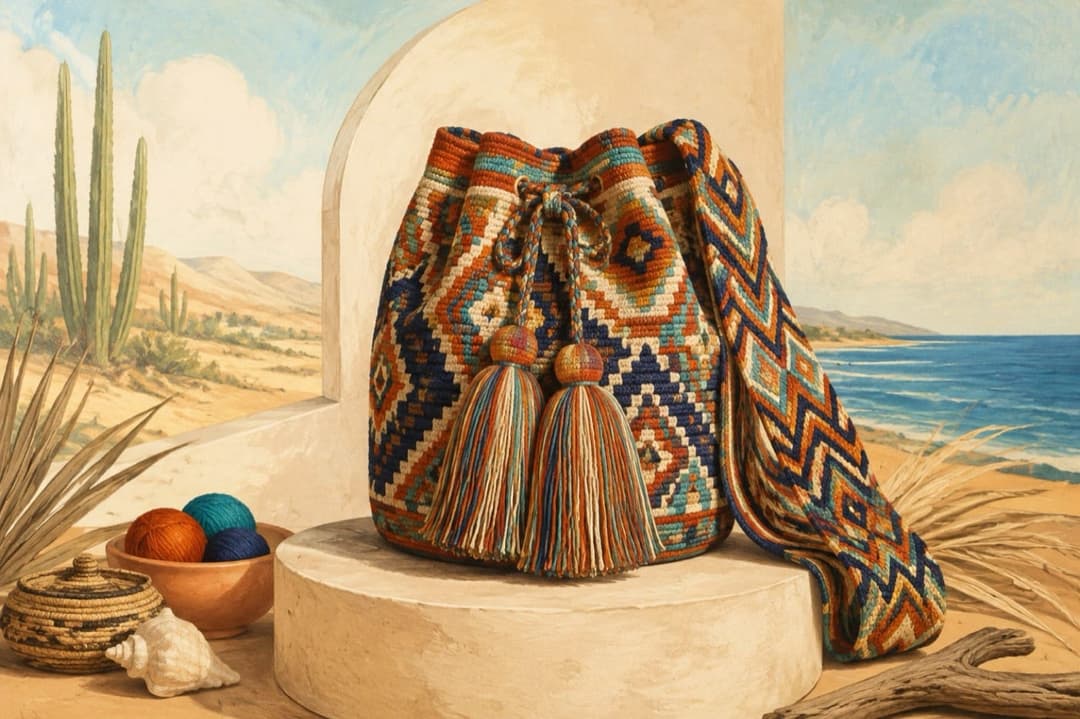
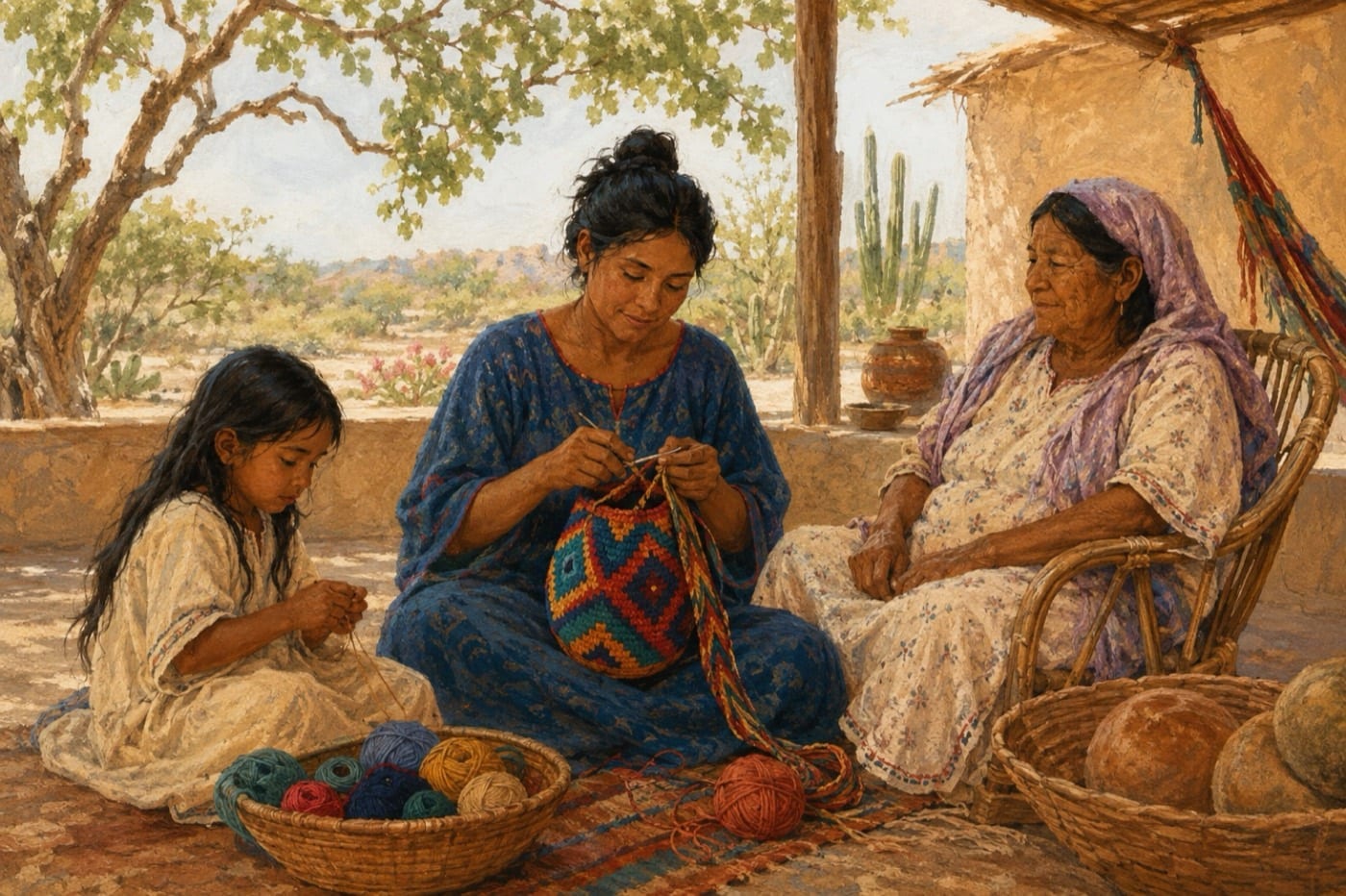
Textile practices are nevertheless a powerful and visible part of Wayuu life. Knowledge is passed between generations, particularly among women, and appears in hammocks, clothing, belts, straps, and bags. Geometric designs known as kanaas can abstract elements of the natural and material world.
To appreciate a Wayuu-made object responsibly is to see both the handwork and the larger culture without claiming that every color or shape has one universal meaning. Makers innovate, choose palettes, and bring individual judgment to every piece.
SHOP THE GUIDE
Compare the pieces
Learn more
References and related reading for this article: