FIELD NOTES · 5 MIN READ
What Is La Guajira? A Guide to Colombia’s Desert Peninsula
Desert, Caribbean water, Indigenous culture, and a landscape unlike anywhere else in Colombia.
Where is La Guajira?
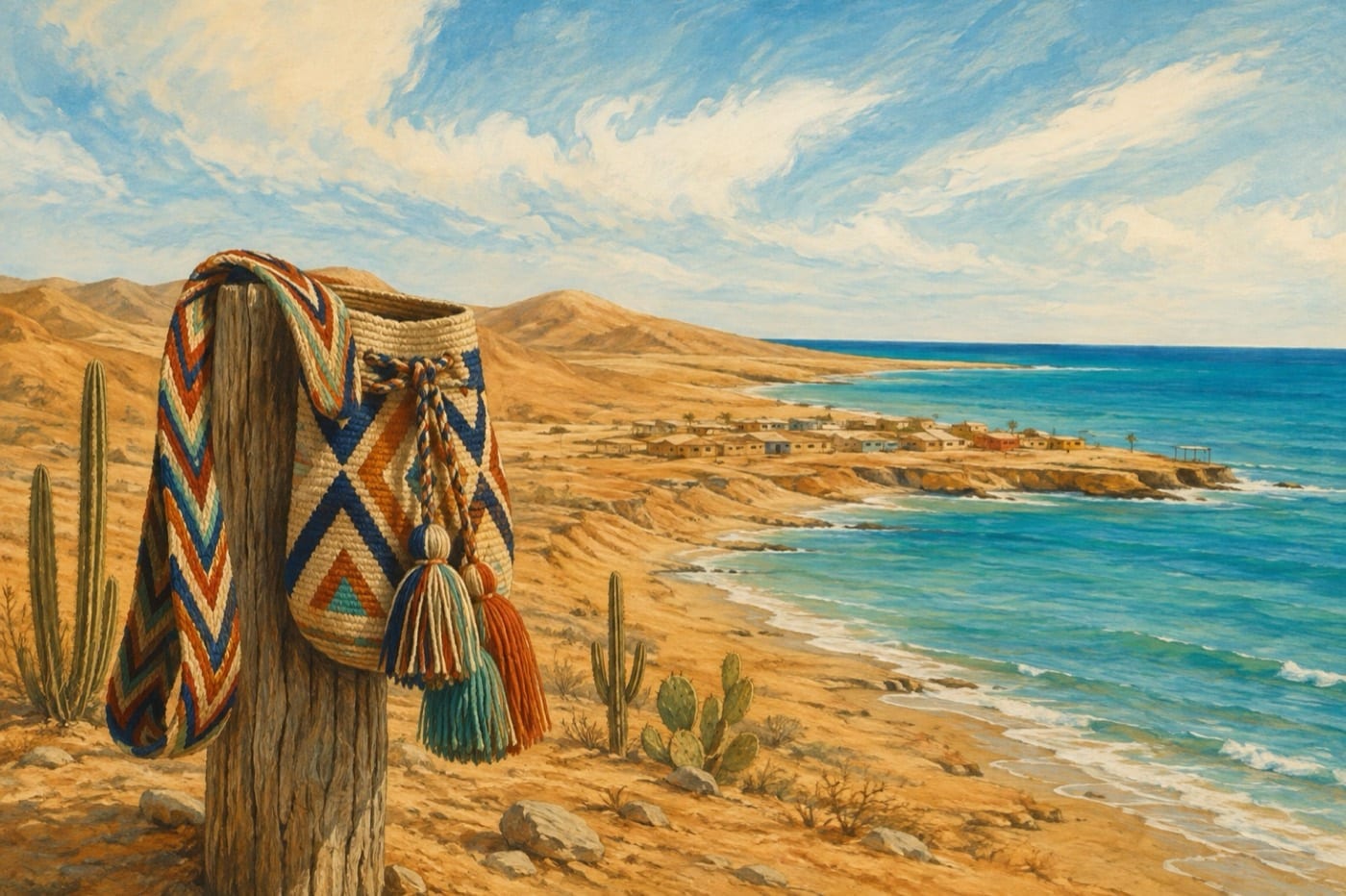
La Guajira is the peninsula at the northern edge of South America, shared by Colombia and Venezuela. On the Colombian side, it is also the name of a Caribbean department whose capital is Riohacha. The landscape moves from dry plains and ochre desert to salt flats, dunes, mangroves, and bright coastal water.
Places such as Cabo de la Vela, Punta Gallinas, Uribia, and Mayapo have become familiar to travelers, but La Guajira is much more than scenery. It is living territory, shaped by community, climate, movement, trade, and deep cultural memory.
The homeland of the Wayuu
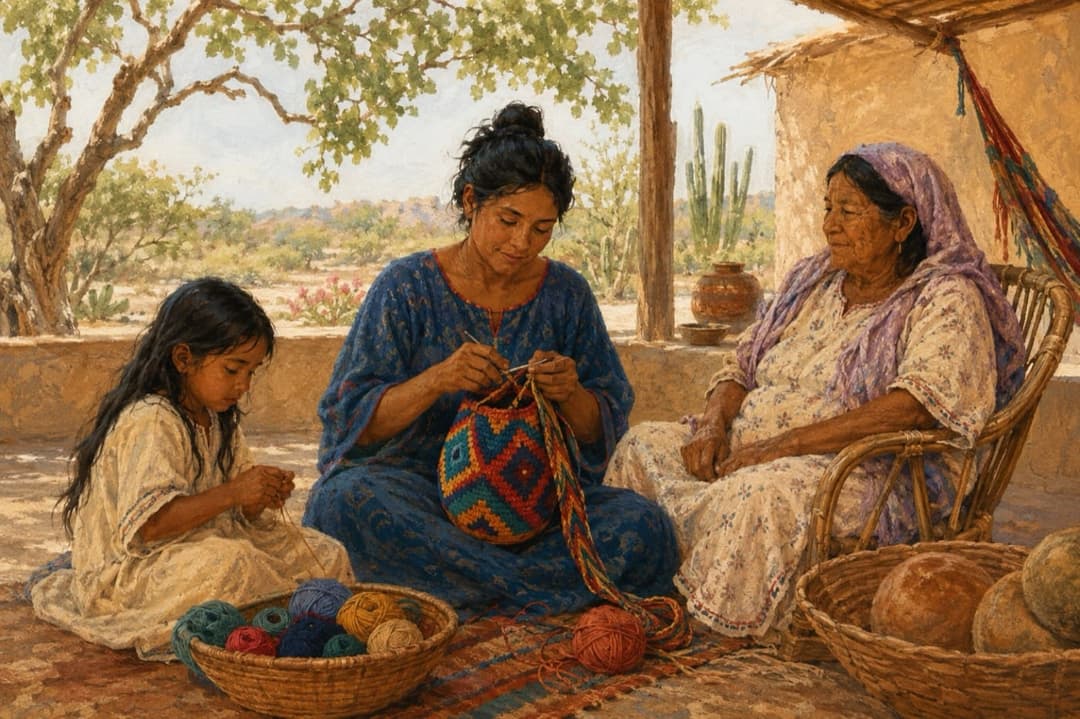
The Wayuu are an Indigenous people whose territory extends across the modern border between Colombia and Venezuela. UNESCO describes the Wayuu as settled on the La Guajira Peninsula and recognizes their pütchipü’üi, or palabrero, system of mediation as Intangible Cultural Heritage of Humanity.
Wayuu social life, language, law, and creative traditions are not attractions added to the landscape; they are part of how the region is understood. Any thoughtful visit—or conversation about objects made there—begins with that distinction.
Why color feels at home here
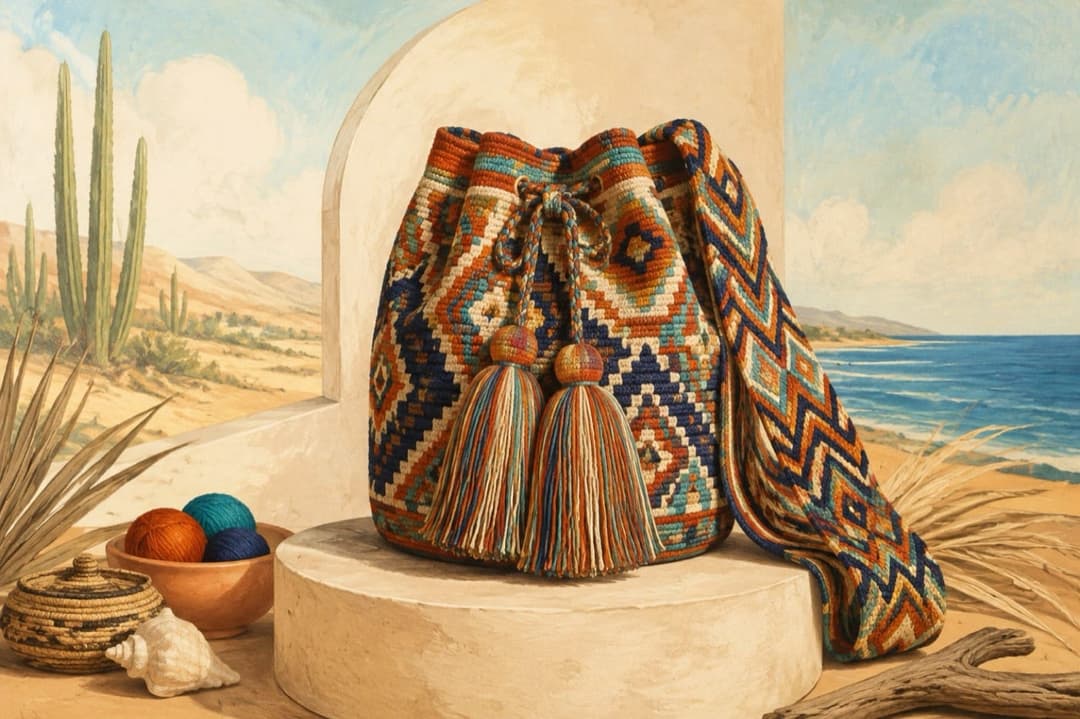
Against sand, salt, scrub, and enormous skies, Wayuu textiles carry extraordinary color. Mochilas, hammocks, belts, and woven straps can feature bold geometry and combinations chosen by individual makers. These pieces are practical, expressive, and connected to knowledge passed through families.
That contrast inspired the names of the Una Hebra collection. Cabo de la Vela, Mayapo, Uribia, Palomino, and Dibulla refer to places across Colombia’s Caribbean north, inviting curiosity about the wider region behind each bag.
Travel with respect
La Guajira can be physically demanding, and many communities face serious infrastructure and resource challenges. Visitors should choose local guides, follow community rules about photography, ask before entering private spaces, conserve water, and avoid treating people or homes as visual props.
The most memorable understanding of La Guajira comes from slowing down: listening to local voices, learning the names of places, and recognizing that the peninsula is home before it is a destination.
SHOP THE GUIDE
Compare the pieces
Learn more
References and related reading for this article: