FIELD NOTES · 6 MIN READ
Wayuu Bag Patterns: What Do Kanaas Mean?
The geometry is a visual language—but it is living knowledge, not a fixed online symbol chart.
What are kanaas?
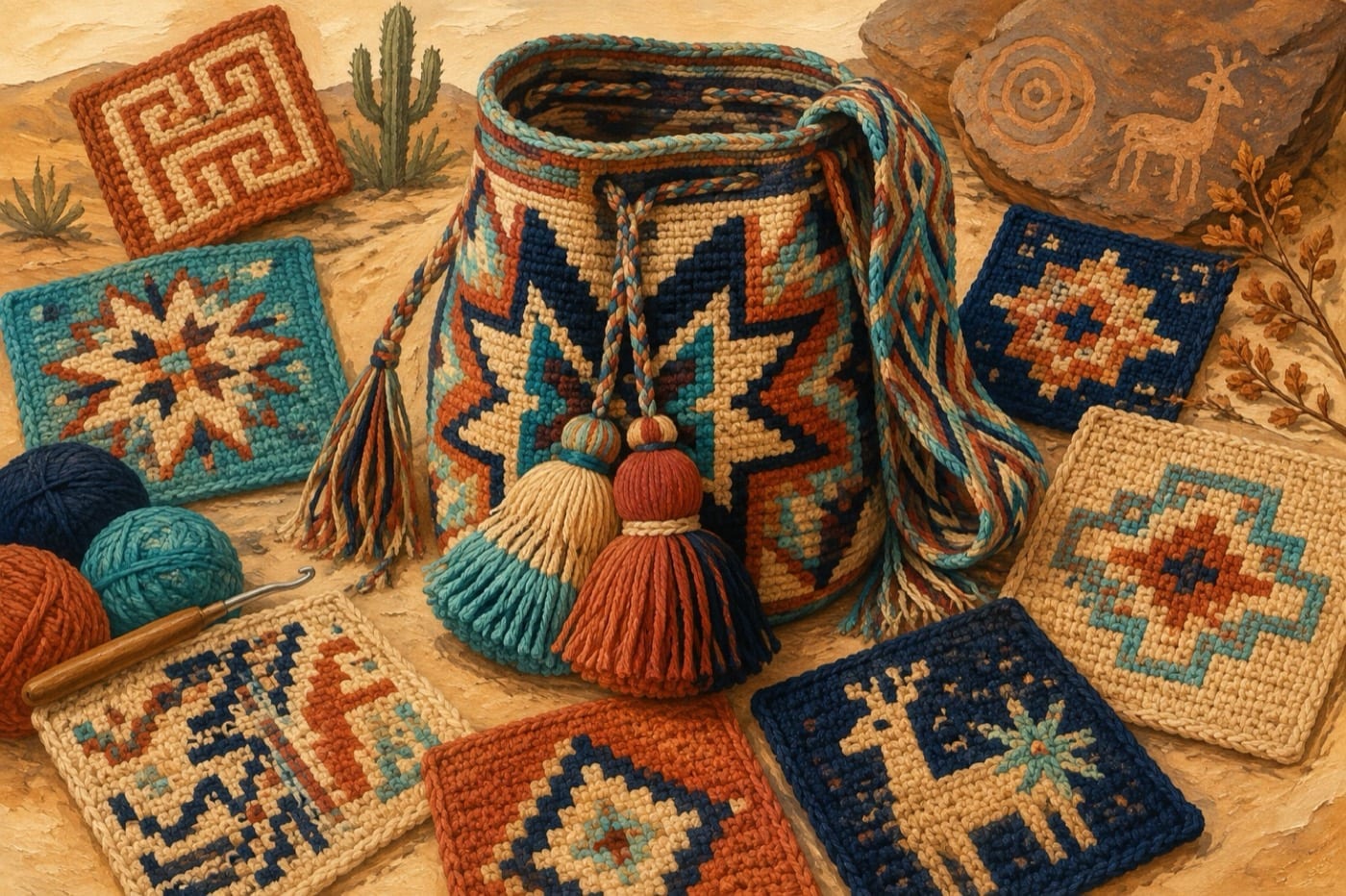
Kanaas—also written kanas or kaanás—are geometric designs found across Wayuu textile traditions, including mochilas, straps, belts, mantas, and chinchorros. Artesanías de Colombia describes them as stylized interpretations of the natural and material world of La Guajira.
Their repeated lines, diamonds, paths, and interlocking forms are built into the textile rather than printed on top. Complexity can demonstrate a maker’s skill and command of color, counting, tension, and composition.
The story of Wale’kerü
Wayuu oral tradition associates weaving knowledge with Wale’kerü, the spider who taught Wayuu women to weave. Institutional records connect named motifs with elements such as stars, animal tracks, tortoise shells, winding paths, and the desert environment.
These references should be approached as cultural knowledge, not decorative trivia. Spellings and interpretations can differ by family and area, and contemporary makers also innovate rather than reproducing one frozen catalog.
Why we do not invent meanings
A retailer cannot responsibly assign a grand symbolic story to every diamond simply because it resembles a documented motif. The person who made the piece and the context in which it was learned matter.
The honest approach is to admire the design that can be seen, share meanings only when they are supported, and leave room for the maker’s individual decisions. A pattern can be beautiful without a seller manufacturing a legend for it.
SHOP THE GUIDE
Compare the pieces
Learn more
References and related reading for this article: