FIELD NOTES · 6 MIN READ
How Are Wayuu Bags Made? One Thread at a Time
From the first loop to the final strap, why technique and patience change the finished mochila.
The bag begins at the base
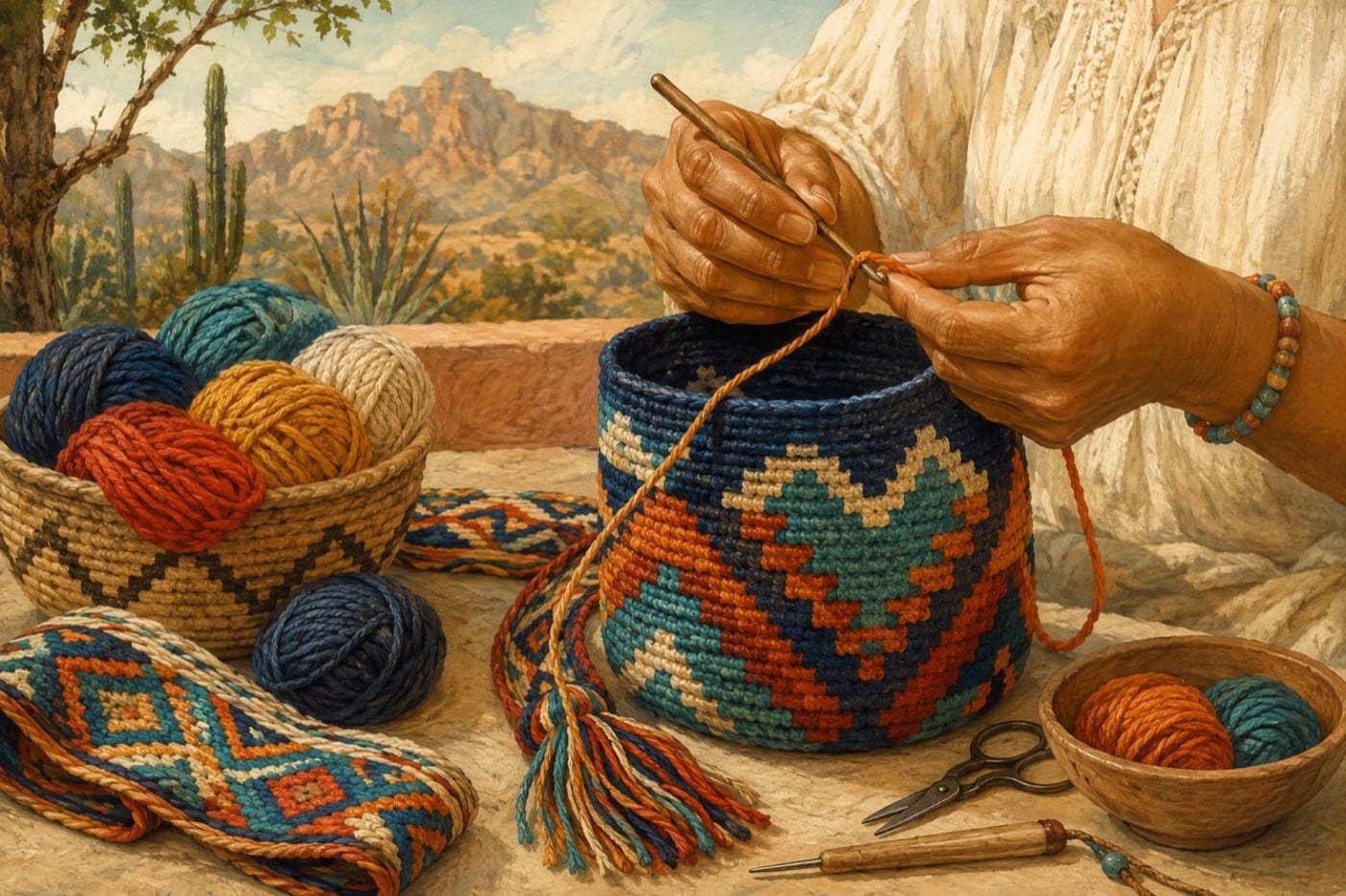
A round mochila commonly begins with a crocheted base. The maker expands the circle stitch by stitch before building upward into the body. Planning matters: increases must be controlled, tension must stay consistent, and the design must resolve around a three-dimensional form.
The body, opening, and drawstring are finished before or alongside the separate strap. The strap is not an afterthought; it carries weight and strongly affects how the bag feels on the shoulder.
Single thread and two thread
The phrases single-thread and two-thread describe how many strands are worked during the crochet process. A single-thread bag generally creates smaller stitches and a denser, more refined surface. It also asks for more individual stitch work across the same area.
Two-thread work can be faster and produces a different texture and scale. Neither phrase should be used as a vague luxury claim: close photography should let a customer see the actual stitch size and finishing.
Patterns are built, not printed
Color changes are worked directly into the structure. Traditional geometric designs called kanaas are associated with abstractions of animals, objects, paths, constellations, and elements of daily life and the natural environment. Complexity can reflect both technical skill and the maker’s design decisions.
Not every geometric bag should be assigned a symbolic story by a seller. Meanings belong in cultural context, and contemporary makers also create new arrangements and palettes. Respect begins with resisting the urge to invent a romantic explanation for every motif.
Finishing the piece
After the body is complete, cords, tassels, and strap are finished and attached. The maker checks shape, joins, and loose ends. The result is a useful object meant to move through daily life—not simply something to display.
Time varies with size, stitch density, pattern complexity, and the artisan’s working rhythm. That is why a precise universal claim such as ‘every bag takes exactly twenty days’ is rarely helpful. The stitches themselves tell the more honest story: handmade work accumulates one deliberate movement at a time.
SHOP THE GUIDE
Compare the pieces
Learn more
References and related reading for this article: